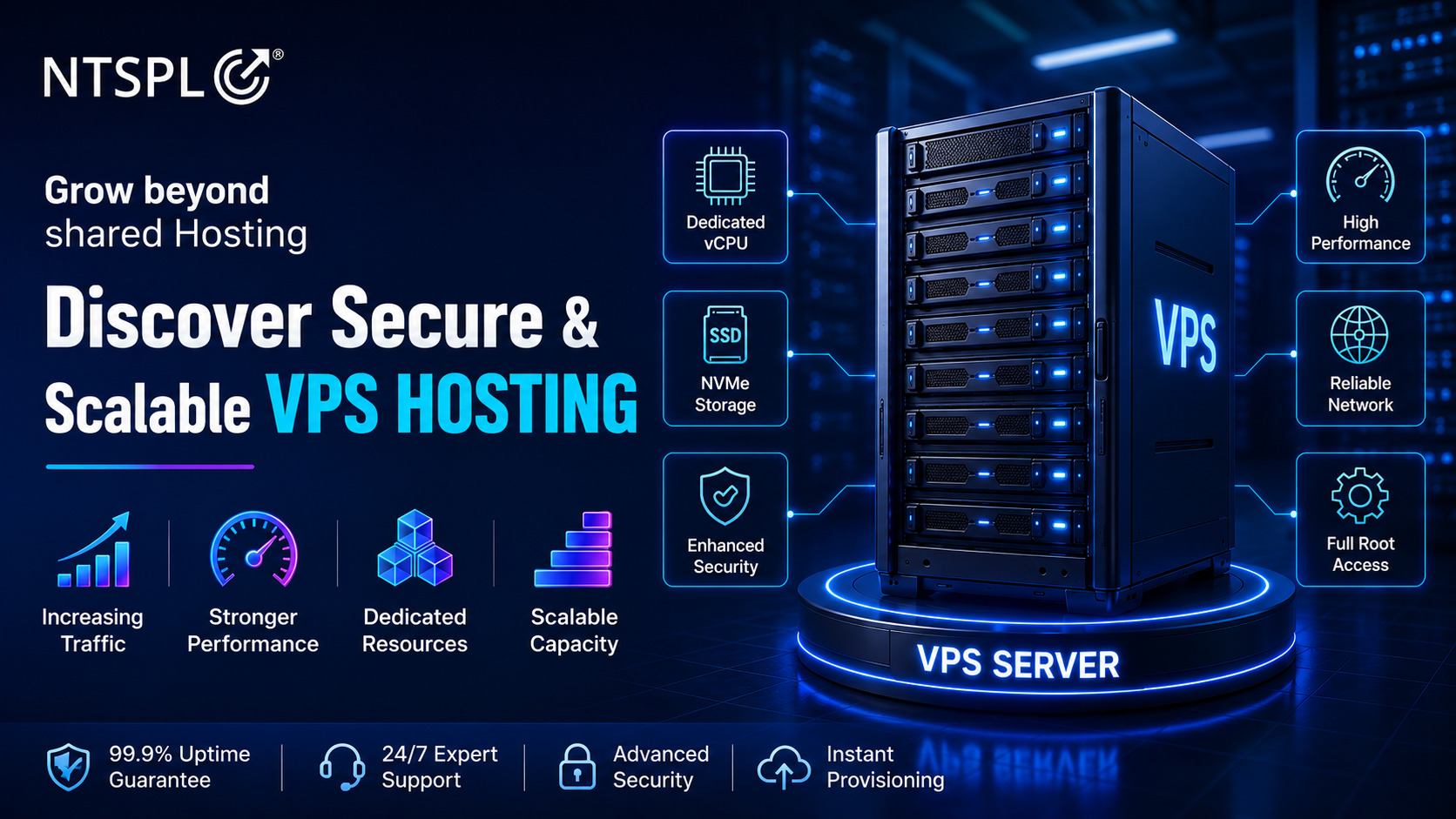
As a website or business application grows, basic hosting may no longer deliver the speed, control or reliability it needs. Slow page loads, limited resources and repeated server errors can affect user experience and business performance. This is where VPS hosting becomes a practical upgrade.
A virtual private server provides dedicated computing resources within a virtualised server environment. It offers more control and stability than shared hosting while remaining more cost-effective than renting an entire physical server.
For businesses searching for reliable VPS hosting services in India, NTSPL Hosting provides managed, scalable and secure server solutions for websites, applications, databases and growing digital workloads.
What Is a VPS?
A VPS, or virtual private server, is an isolated virtual environment created within a physical server. Virtualisation technology divides the physical machine into multiple independent server environments. Each VPS operates with its own allocated CPU, RAM, storage and operating system.
Although several virtual servers may use the same physical hardware, their environments remain separated. Resources assigned to one VPS are not freely consumed by another account in the way they can be under basic shared hosting.
This structure gives businesses greater control, predictable performance and the ability to configure the server according to their technical requirements.
What Is VPS Hosting?
VPS hosting is a hosting service in which a provider supplies a virtual server with allocated resources for a website, application or other workload. The provider manages the underlying physical infrastructure, while the customer uses the virtual environment according to the selected plan and level of management.
Depending on the service, customers may receive operating-system choices, administrative or root-access options, security controls, monitoring, backups and technical support. A managed VPS hosting plan also reduces the burden of routine server administration.
With NTSPL VPS hosting, businesses can deploy digital workloads on high-performance infrastructure with flexible resource allocation, enterprise security, root-access options and expert support.
What Is a VPS Used For?
A VPS can support many business and development requirements. Common use cases include the following.
Hosting Business Websites
A VPS server hosting environment is suitable for corporate websites that require better speed, availability and control than standard shared hosting can provide. Dedicated resources help the website handle increased traffic, dynamic content and business-critical functions more consistently.
Running Web Applications
Businesses can use a VPS to host customer portals, internal applications, SaaS platforms, CRM tools and other web-based systems. The isolated environment enables teams to configure the software stack and server settings around the needs of the application.
Hosting eCommerce Platforms
Online stores often require dependable performance, stronger security and the capacity to manage traffic changes. Secure VPS hosting can support product catalogues, databases, customer accounts and payment-related integrations while giving administrators more control over the server environment.
Creating Development and Testing Environments
Developers can use a VPS to build, test and stage applications without changing the live production environment. Teams can install frameworks, databases and dependencies, test new releases and recreate deployment conditions in an isolated workspace.
Hosting Databases
A VPS can run databases used by websites, mobile applications and business systems. Dedicated RAM and processing resources can provide more consistent database performance than a heavily shared environment, subject to proper server sizing and optimisation.
Supporting File and Backup Storage
Businesses may configure a VPS as a controlled location for files, website backups or application data. Appropriate encryption, access permissions and backup policies should always be implemented when storing important business information.
Hosting Business Email or Collaboration Tools
A properly configured virtual server can support email, collaboration or communication applications. This use case requires careful security management, monitoring, spam protection and regular maintenance.
How Does VPS Hosting Work?
A software layer called a hypervisor separates a physical server into multiple virtual machines. Each virtual machine functions as an independent server with its own operating system and assigned resources.
When you purchase a VPS hosting plan, you receive access to one of these isolated environments. You can deploy your website or application, configure the operating system, install supported software and manage server settings according to the permissions included in your plan.
The isolation between virtual servers improves resource control. If another customer experiences a sudden traffic increase, your allocated resources remain more predictable than they would be in a traditional shared-hosting environment.
VPS Hosting vs Shared Hosting vs Dedicated Hosting
Choosing the right hosting type depends on traffic, application complexity, security requirements, technical control and budget.
Shared Hosting:
In shared hosting, multiple websites use the same server resources with limited separation and administrative control. It is economical and convenient for small websites, portfolios and early-stage projects with modest traffic.
However, performance can become less predictable when several websites compete for memory, storage access and processing capacity. Custom server configurations are also usually restricted.
VPS Hosting:
With VPS hosting, the physical server is divided into isolated virtual environments. Each customer receives allocated resources and more control over configuration. It is a strong option for growing websites, eCommerce platforms, business applications and organisations moving beyond the limitations of shared hosting.
Dedicated Hosting:
Dedicated hosting provides exclusive use of an entire physical server. It offers maximum hardware control and is appropriate for large, demanding or specialised workloads. However, it generally costs more and may require greater technical management.
Quick Comparison:
| Hosting type | Resource model | Control | Typical use | Relative cost |
| Shared hosting | Resources shared among many accounts | Limited | Small and low-traffic websites | Lower |
| VPS hosting | Allocated resources in an isolated virtual server | High | Growing websites and business applications | Moderate |
| Dedicated hosting | Entire physical server assigned to one customer | Maximum | High-demand and mission-critical workloads | Higher |
For many growing businesses, scalable VPS hosting provides a useful balance of performance, control and cost.
When Should You Switch to VPS Hosting?
Moving from shared hosting to a VPS may be appropriate when your current environment begins restricting performance or growth.
Your Website Traffic Is Increasing
Higher visitor numbers create more requests for the server to process. If pages slow down or availability becomes inconsistent during busy periods, the allocated resources of a VPS may provide a more stable experience.
You Need Better and More Predictable Performance
A VPS allocates specific resources to your environment. This can reduce the performance variation commonly associated with shared hosting and give business applications a more dependable foundation.
You Need Custom Server Configurations
Shared hosting normally offers limited control over the operating system and server software. A VPS can provide greater freedom to install supported applications, configure services and adjust the environment to meet technical requirements.
You Are Experiencing Resource-Related Errors
As a site grows in content, integrations or functionality, it may require more CPU, RAM or storage. Frequent time-outs, service-unavailable messages or resource-limit errors can indicate that the current hosting plan is no longer sufficient.
Your Business Requires Stronger Isolation
The isolated architecture of a VPS offers better separation from other customer environments than shared hosting. Combined with firewalls, security updates, malware protection and controlled access, it can support a stronger security posture.
You Want a Clearer Growth Path
With scalable VPS hosting, resources can be adjusted as the business grows, subject to plan availability. This helps organisations avoid moving immediately from entry-level hosting to the cost and complexity of a full dedicated server.
What Are the Types of VPS Hosting?
VPS plans are commonly grouped according to who manages the operating system, security updates, monitoring and other administrative responsibilities.
Unmanaged VPS Hosting
With unmanaged or self-managed VPS hosting, the provider maintains the physical infrastructure and virtualisation platform, while the customer manages most server-level activities.
The customer is typically responsible for:
- Operating-system administration
- Software installation and configuration
- Updates and security patches
- Server monitoring
- Backup configuration
- Troubleshooting
This model is best suited to organisations with experienced system administrators or a dedicated technical team.
Managed VPS Hosting
With managed VPS hosting, the provider handles defined server-management responsibilities. Depending on the selected service, these may include server setup, monitoring, maintenance, security hardening, updates, backups and technical troubleshooting.
Managed hosting is valuable for businesses that want the benefits of a VPS without assigning their internal team to routine infrastructure management.
NTSPL Hosting offers fully managed VPS solutions designed to support secure and reliable business operations.
Semi-Managed VPS Hosting
Semi-managed hosting sits between unmanaged and fully managed service. The provider may support the operating system and selected core services, while the customer remains responsible for applications, specialised configurations or other administrative tasks.
Because responsibilities vary between providers, businesses should confirm exactly what is included before purchasing a plan.
Linux VPS Hosting vs Windows VPS Hosting
The operating system should match the application stack, administrative experience and licensing requirements of the organisation.
Linux VPS Hosting
Linux VPS hosting is widely used for websites and applications built with technologies such as PHP, Python, MySQL and popular open-source frameworks. It is valued for flexibility, stability and broad development-tool support.
Windows VPS Hosting
Windows VPS hosting is suitable for businesses using Microsoft-oriented workloads and technologies that depend on a Windows Server environment. It also provides a familiar interface for teams experienced with Microsoft administration.
NTSPL Hosting provides advanced cloud VPS options for both Linux and Windows environments, allowing businesses to select an operating system that aligns with their workload.
Is VPS Hosting Secure?
Yes, a properly managed and configured VPS can provide a secure hosting environment. Virtual isolation separates your server environment from other accounts on the same physical machine. However, isolation alone is not enough; server security depends on continuous configuration and maintenance.
Important VPS security measures include:
- Regular operating-system and software updates
- Firewall configuration
- Malware scanning and antivirus protection
- Strong passwords and controlled administrative access
- SSL certificates and data encryption
- DDoS protection
- Automated backups and recovery planning
- Continuous monitoring and server hardening
NTSPL Hosting supports business workloads with enterprise security controls, proactive monitoring, backup options and technical assistance. Organisations should select the controls that match their workload and compliance requirements.
Is VPS Hosting Fast and Reliable?
A VPS can deliver faster and more consistent performance than shared hosting because it provides allocated CPU, memory and storage resources. Performance still depends on server configuration, application optimisation, traffic levels, resource allocation and data-centre connectivity.
A correctly sized high-performance VPS hosting plan can help:
- Improve website response times
- Support more concurrent visitors
- Reduce competition for server resources
- Run database-driven applications more consistently
- Accommodate changing business requirements
Monitoring remains important. Usage data can help businesses identify when they need additional CPU, RAM, storage or bandwidth.
Key Benefits of VPS Hosting
Businesses choose VPS hosting for several important advantages.
Dedicated Resources
Allocated CPU, RAM and storage deliver greater resource predictability than basic shared hosting.
Greater Administrative Control
Root or administrator-access options allow authorised teams to configure supported software and server settings according to business requirements.
Improved Scalability
Resources can be expanded as website traffic, data or application demand increases, depending on the available plan.
Stronger Isolation
Each VPS operates within an isolated virtual environment, reducing direct resource interference from other hosting accounts.
Cost Efficiency
A VPS provides many of the control and performance advantages associated with dedicated infrastructure without requiring a business to rent an entire physical server.
Support for Multiple Workloads
A single VPS environment can be configured for websites, applications, development environments, databases or other compatible workloads.
Why Choose NTSPL VPS Hosting?
Selecting the right VPS hosting provider in India is about more than CPU, RAM and storage. Businesses also need security, migration support, monitoring and access to knowledgeable technical assistance.
NTSPL Hosting provides VPS solutions designed for growing businesses and enterprise workloads. Key service advantages include:
- Fully managed VPS hosting options
- Flexible resource allocation
- Linux and Windows VPS environments
- Root-access options
- Enterprise-grade security
- High-performance infrastructure
- Proactive monitoring and server support
- Backup and migration assistance
- 24/7 expert technical support
- A scalable upgrade path for growing workloads
Whether you are moving from shared hosting, deploying a business application or preparing for higher traffic, NTSPL VPS hosting services can provide a secure and scalable environment tailored to your requirements.
How to Choose the Right VPS Hosting Plan
Before selecting a plan, assess the technical and operational needs of your workload.
Estimate Resource Requirements
Review current and expected traffic, CPU usage, memory demand, storage size and bandwidth consumption. Select enough capacity for regular operations and reasonable growth.
Choose the Operating System
Select Linux or Windows based on your application technologies, software compatibility and internal expertise.
Decide How Much Management You Need
Choose unmanaged hosting only if your team can maintain and secure the server. Otherwise, a managed VPS hosting solution can reduce operational effort and risk.
Review Security and Backup Requirements
Confirm the availability of firewalls, DDoS protection, malware controls, SSL support, backups, monitoring and recovery assistance.
Check Scalability
Ensure the plan allows resources to grow as traffic and application demands increase.
Evaluate Support
Responsive technical support is important during migrations, configuration changes and unexpected issues. Review support coverage and the scope of management before making a decision.
FAQ:
1) Is VPS hosting suitable for a small business?
Yes. VPS hosting can be a good choice for a small business whose website or application requires more performance, security or control than shared hosting provides. The right plan depends on traffic, workload and budget.
2) Do I need technical knowledge to use VPS hosting?
Technical knowledge is required for an unmanaged VPS. With managed VPS hosting, the provider handles defined infrastructure and maintenance tasks, making the service more accessible to businesses without a dedicated server-administration team.
3) Can I host multiple websites on one VPS?
Yes, multiple websites can generally be hosted on one VPS if the server has sufficient resources and is configured correctly. Security, isolation, licensing and control-panel requirements should be considered.
4) Can I upgrade my VPS resources later?
VPS plans are designed to be scalable, but upgrade options depend on the provider and selected infrastructure. Confirm CPU, RAM, storage and bandwidth upgrade paths before purchase.
5) Is VPS hosting better than shared hosting?
VPS hosting provides more control, allocated resources and stronger isolation. Shared hosting remains suitable for small and simple websites, while VPS hosting is better suited to growing or more demanding workloads.
6) Does NTSPL provide managed VPS hosting?
Yes. NTSPL Hosting offers fully managed VPS solutions with flexible resources, enterprise security, root-access options, high-performance infrastructure and 24/7 technical support.
VPS hosting bridges the gap between affordable shared hosting and powerful dedicated infrastructure. It gives growing businesses allocated resources, greater control, improved isolation and a scalable foundation for websites and applications.
The right VPS solution should match your workload, operating-system needs, security expectations and internal technical capabilities. For organisations seeking dependable VPS hosting services in India, NTSPL Hosting offers managed Linux and Windows VPS solutions backed by expert support and business-focused infrastructure.
Ready to improve your website or application performance? Explore NTSPL Dedicated and VPS Hosting or speak with the NTSPL Hosting team to identify the right server configuration for your business.