In today’s digital business environment, customers expect fast, secure, and reliable online transactions. Whether you run an eCommerce store, SaaS platform, booking portal, subscription-based website, or enterprise payment application, protecting customer payment data is no longer optional.
This is where PCI-compliant hosting becomes important.
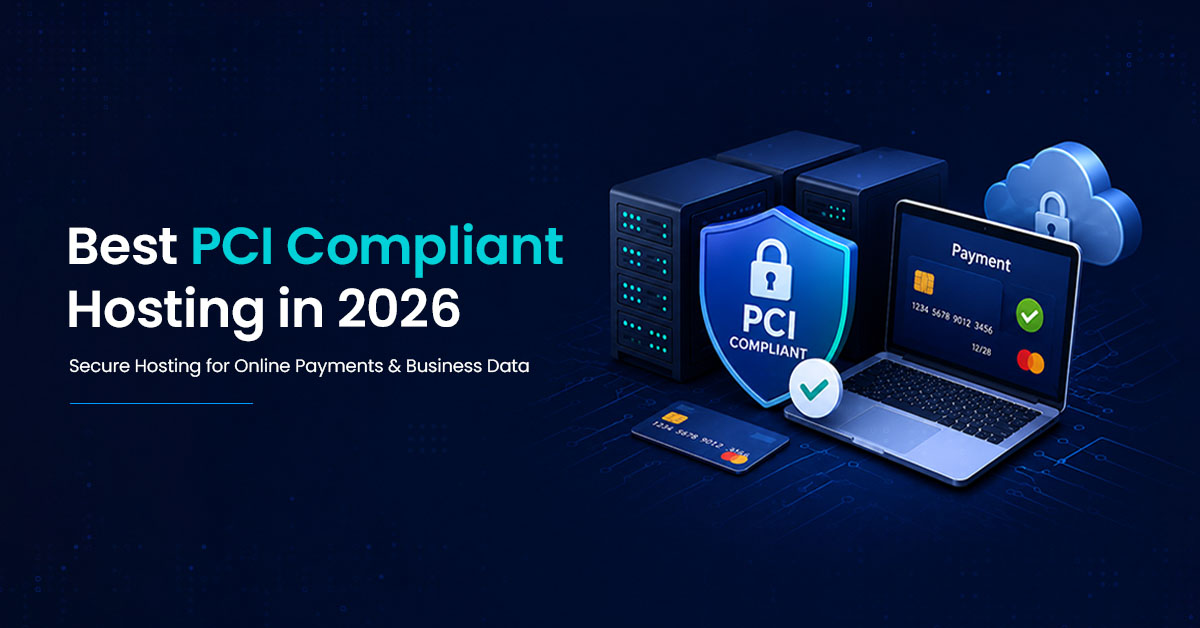
PCI-compliant hosting helps businesses build a secure environment aligned with PCI DSS standards, reducing security risks associated with cardholder data, online payments, and sensitive customer information.
What Is PCI-Compliant Hosting?
PCI-compliant hosting refers to a hosting environment designed to support the security requirements of PCI DSS, also known as the Payment Card Industry Data Security Standard.
PCI DSS applies to businesses and service providers that store, process, or transmit payment card data. It focuses on protecting payment information through strong security controls, access restrictions, monitoring, encryption, vulnerability management, and regular security testing.
In simple words, if your website accepts online payments or connects with payment systems, your hosting environment should support secure payment processing.
Why PCI-Compliant Hosting Matters in 2026
Online payment fraud, data breaches, phishing attacks, and website vulnerabilities continue to be major concerns for businesses. A weak hosting setup can expose sensitive payment data and damage customer trust.
PCI-compliant hosting helps businesses:
- Protect customer cardholder data
- Reduce payment security risks
- Strengthen website and server security
- Improve trust for online transactions
- Support audit and compliance readiness
- Minimize downtime caused by cyber threats
- Build a safer digital payment experience
For industries such as eCommerce, fintech, healthcare, education, travel, retail, and SaaS, secure hosting is a critical part of business continuity.
PCI-Compliant Hosting vs Regular Hosting
Regular hosting may be suitable for basic websites, portfolios, or informational pages. However, businesses handling online payments need a more secure and controlled hosting environment.
PCI-compliant hosting generally includes stronger security layers such as firewalls, malware protection, SSL certificates, access control, monitoring, patch management, secure server configuration, and vulnerability scanning support.
The key difference is simple:
Regular hosting focuses mainly on website availability.
PCI-compliant hosting focuses on website availability, payment security, data protection, and compliance support.
Key Features to Look for in PCI-Compliant Hosting
Choosing the right hosting provider is important because compliance is not achieved only by installing one security tool. It requires a secure infrastructure, proper configuration, and continuous monitoring.
Here are the important features businesses should look for:
1. SSL Certificate Support
SSL encryption helps secure data transferred between the user’s browser and the website server. It is essential for websites that collect login details, payment information, forms, and customer data.
A secure website should always use HTTPS with a valid SSL certificate.
2. Firewall Protection
A firewall helps filter unwanted traffic and block suspicious access attempts before they reach the server. For payment-based websites, firewall protection adds an important layer of defense against unauthorized access and cyberattacks.
3. Secure Server Configuration
A PCI-ready hosting environment should be configured securely with limited access, updated software, strong authentication, and controlled permissions.
Poor server configuration can create security gaps even if the website application is well developed.
4. Regular Security Patching
Outdated software, plugins, CMS versions, and server components are common targets for attackers. Regular patching helps reduce known vulnerabilities and keeps the hosting environment more secure.
5. Malware Scanning and Protection
Malware can affect website performance, steal data, redirect users, or compromise payment pages. A secure hosting solution should support malware scanning, threat detection, and quick remediation.
6. Backup and Recovery
Reliable backup solutions help businesses recover quickly in case of data loss, server issues, ransomware, or website compromise. Backup frequency and recovery process should be clearly defined.
7. Access Control and Authentication
Only authorized users should have access to hosting panels, databases, payment-related files, and server settings. Strong passwords, role-based access, and multi-factor authentication help reduce unauthorized access risks.
8. Logging and Monitoring
Security logs help track server activity, login attempts, errors, suspicious behavior, and possible threats. Continuous monitoring makes it easier to detect and respond to issues early.
9. Vulnerability Scanning Support
PCI DSS requires businesses to identify and manage security vulnerabilities. A good hosting provider should support vulnerability scanning and provide the technical environment needed for assessment and remediation.
Who Needs PCI-Compliant Hosting?
PCI-compliant hosting is important for any business that accepts, processes, stores, or transmits payment card data.
It is especially useful for:
- eCommerce websites
- Online booking platforms
- Fintech applications
- SaaS platforms with paid subscriptions
- Healthcare payment portals
- Educational fee payment portals
- Retail and marketplace websites
- Travel and ticketing platforms
- Membership websites
- Enterprise customer portals
Even if a third-party payment gateway is used, businesses still need to ensure their website and hosting environment do not create security gaps.
How to Choose the Best PCI-Compliant Hosting Provider
Before selecting a hosting provider, businesses should evaluate both technical capabilities and support quality.
Consider the following points:
1. Understand Your Payment Flow
Check whether your website stores card data, redirects users to a payment gateway, or processes payments directly. This helps determine the level of hosting security and compliance support required.
2. Choose the Right Hosting Type
For payment-based websites, VPS, dedicated servers, managed cloud, or enterprise cloud hosting are usually better than basic shared hosting because they provide better control, isolation, and security configuration.
3. Check Security Features
Look for SSL support, firewall, malware protection, DDoS protection, backup, access control, monitoring, and patching support.
4. Review Support Availability
Security issues and payment downtime can affect revenue. Choose a hosting provider that offers reliable technical support and quick response.
5. Ask About Compliance Support
Hosting providers cannot make your entire business PCI compliant by themselves, but they can provide a secure infrastructure that supports PCI DSS requirements.
6. Plan for Scalability
As your business grows, traffic, transactions, storage, and security requirements will increase. Choose hosting that can scale without affecting performance.
Common Mistakes Businesses Should Avoid
Many businesses assume that using a payment gateway automatically makes the whole website PCI compliant. This is not always true.
Avoid these mistakes:
- Using low-security shared hosting for payment websites
- Ignoring SSL certificate renewal
- Keeping outdated CMS, plugins, or scripts
- Using weak admin passwords
- Not monitoring website activity
- Not taking regular backups
- Giving unnecessary access to multiple users
- Not reviewing payment page security
- Ignoring vulnerability scan results
A secure hosting strategy should be proactive, not reactive.
Benefits of PCI-Compliant Hosting for Businesses
PCI-compliant hosting helps organizations create a safer digital environment for payments and customer data.
Key benefits include:
- Improved customer trust
- Better payment data protection
- Reduced risk of cyberattacks
- Stronger website security
- Better compliance readiness
- Improved business reputation
- More secure online transaction experience
- Better control over hosting infrastructure
For businesses that depend on online transactions, secure hosting is an investment in trust, continuity, and long-term growth.
Why Choose NTSPL for Secure Hosting Solutions?
NTSPL provides reliable hosting and cloud solutions designed to support modern business needs. From websites and applications to enterprise workloads, NTSPL helps organizations build secure, scalable, and performance-driven hosting environments.
With NTSPL, businesses can get support for:
- Secure web hosting
- Cloud hosting solutions
- VPS and dedicated server solutions
- SSL certificate setup
- Backup and recovery support
- Server monitoring
- Security-focused hosting configuration
- Business email and domain support
- Scalable infrastructure for growing businesses
NTSPL helps businesses focus on growth while ensuring their hosting environment remains secure, reliable, and ready for digital operations.
PCI-compliant hosting is not just about meeting a standard. It is about protecting customer trust, securing online payments, and reducing business risk.
As online transactions continue to grow in 2026, businesses must choose hosting environments that support security, compliance readiness, performance, and scalability.
A secure hosting partner like NTSPL can help businesses build a stronger digital foundation for safe online transactions and long-term success.
Secure your online payments with reliable hosting built for trust, performance, and business growth.